In the toolbox of EU competition enforcement, Inability to Pay (ITP) is a curious instrument. It exists, it’s official, and it’s mentioned in the Commission’s 2006 Fining Guidelines (point 35, to be precise). But for many, it feels a bit like a theoretical lifeboat: part of the ship’s safety design, yet rarely deployed — and almost never spotted returning to shore.
The principle behind ITP is simple: fines, however justified, should not irreparably sink a company. Deterrence matters — but not at the cost of economic annihilation, massive job losses, or collapse of vital services. There’s a recognition, albeit understated, that competition policy doesn’t operate in a vacuum. As such, where a fine would “irretrievably jeopardise the economic viability” of an undertaking and “cause its assets to lose all their value”, a reduction is possible, within a specific social and economic context.
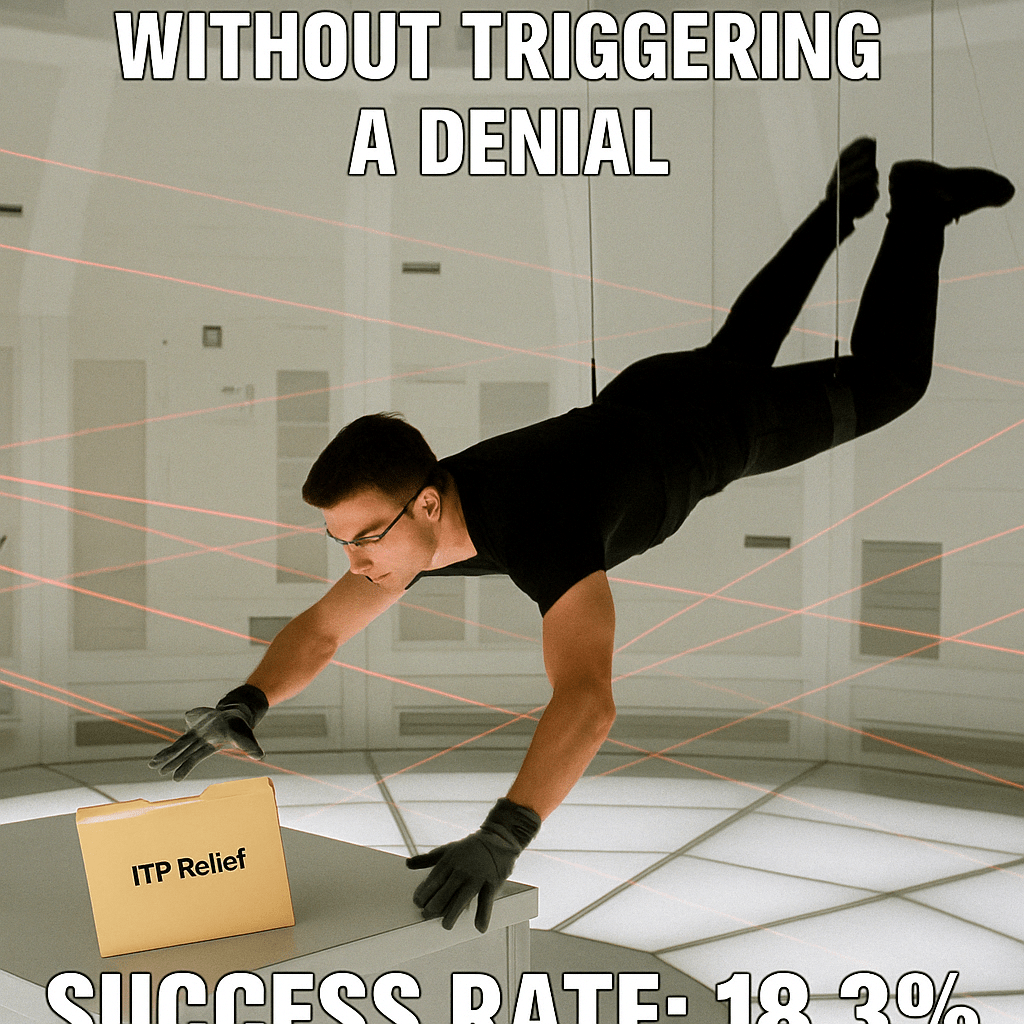
Yet possible does not mean probable. Between 2000 and 2019, only 18% of ITP claims were successful. Most companies that knock on this particular door find it firmly shut — if not locked from the inside.
So, is ITP just a mirage of mercy? Or is it doing exactly what it’s meant to do — provide a lifeline for the few, not the many?
Let’s turn to a real case.
Abengoa: When the Threshold Is Met
Abengoa — once a major player in renewable energy and ethanol production in Europe — recently found itself on the receiving end of a €20 million fine by the Commission. Its offence? Participating in a cartel aimed at manipulating ethanol price benchmarks published by Platts, an infringement that spanned nearly three years and affected the entire European Economic Area.
The case was serious, and the evidence compelling. But what made it remarkable, procedurally speaking, was that Abengoa submitted a request for fine reduction under the ITP mechanism — and the Commission accepted it.
Yes, you read that correctly. In a world where 4 out of 5 such requests fail, Abengoa succeeded.
Why?
Because Abengoa had long been navigating stormy waters: it had undergone painful restructuring, faced multiple insolvency proceedings in Spain, and was the subject of national and international concern. Its financial vulnerability wasn’t speculative — it was structural and well-documented.
The Commission, after thoroughly examining the company’s accounts and the state of implementation of its restructuring plans, granted a reduction. It didn’t tear up the fine altogether (nor should it), but it acknowledged the exceptional context. Combined with a 10% discount for settlement cooperation, the final sanction reflected both gravity and economic realism.
A Safety Valve, Not a Safety Net
The takeaway from Abengoa is not that the ITP door is now wide open. It isn’t — and it shouldn’t be. A system that routinely allows companies to plead poverty after breaching EU law would undermine deterrence and incentivise moral hazard.
But it does suggest something more subtle, and arguably more important: that the ITP mechanism works when it is supposed to. Its rarity is not necessarily a sign of failure, but of design. After all, emergency exits are not meant to be the main route — they’re there for when all others are blocked.
If anything, Abengoa shows us that ITP is not a loophole but a disciplinary exception. It’s hard to get, it demands full transparency, and it requires the Commission to balance legal firmness with economic insight.
And perhaps, as enforcement becomes more entangled with questions of social sustainability, the real question is not whythe ITP is used so little, but whether we’re ready to accept that some safeguards should only work when everything else doesn’t.
A fire extinguisher isn’t broken just because it spends most of its life behind glass.

 Co(E)mpetition Procedure