
Subscribe to continue reading
Subscribe to get access to the rest of this post and other subscriber-only content.
Seminar on EU Competition Law Procedure (2023)

Subscribe to get access to the rest of this post and other subscriber-only content.

Pursuant to Article 23 of Regulation 1/2003, the European Commission has the power to impose fines in competition law infringements. These must be high enough to fulfill their key objective: the deterrence of anti-competitive behaviour. Indeed, fines and the application of Articles 101 and 102 TFEU are intrinsically linked (Opinion of AG Mengozzi in X, C-429/07, para. 38).
Although the Commission’s methodology for calculating fines has been formally structured in its 2006 Guidelines, its deterrent impact has been weakened by the CJEU’s recent case law – particularly in the financial sector – which has exposed significant inconsistencies.
The Commission’s 2021 decision on the European Government Bonds cartel, which was upheld in the General Court’s (‘GC’) judgement on March 26th 2025 (T-441/21, T-453/21, T-455/21, T-456/21 and T-462/21), illustrates the discrepancies in fine calculation.
On the one hand, Nomura, UBS, and UniCredit faced fines totaling €371 million. However, Nomura contested the Commission’s refusal to use the exact data it had provided and UniCredit demonstrated that its involvement started 17 days later than the Commission claimed. Thus, the GC reduced their fines on these grounds, which begs the question of the robustness of the Commission’s methodology if such calculation errors can materially alter fines.
On the other hand, Bank of America and Natixis were not fined because the Commission’s power to impose financial penalties was time-barred. Moreover, NatWest applied for leniency and received total immunity from fines. Although leniency programs serve a legitimate purpose, the flagrant contrast in penalties between those that were fined and those that were not creates a perception of randomness rather than fairness.
In addition, in the SSA Bonds cartel case (T-386/21 and T-406/21), the Commission imposed a fine on Bank of America (€12.6 million), Credit Suisse (€11.9 million) and Crédit Agricole (€3.9 million) but granted immunity from fines to Deutsche Bank due to its cooperation during the investigation. Rather than using the usual methodology which is based on the turnover of the undertakings (meaning direct revenue figures), the Commission opted to calculate fines on a proxy for that turnover. This proxy was derived from the notional amounts of the SSA bonds traded and an adjustment factor linked to spreads between the purchase price and the sale price of representative categories of SSA bonds acquired and then resold by each bank.
The Commission justified its approach by stating that its objective was to reflect the specific nature of financial markets. Crédit Agricole and Credit Suisse contested this methodology as it introduces an element of arbitrariness, leading to fines that did not reflect their actual economic benefit from the infringement.
Nonetheless, the GC endorsed the Commission’s methodology, although it annulled part of the decision concerning the timeline of Crédit Agricole’s participation in the cartel. This divergence from the usual methodology for calculating fines challenges the robustness of the latter.
Finally, the unpredictability of fine calculation was further illustrated in the Euro Interest Rate Derivatives (EIRD) case against HSBC ((T-561/21).
In 2016, the Commission initially fined HSBC €33.6 million but its decision was annulled by the GC due to inadequate reasoning. In 2021, the Commission reissued a revised fine of €31.7 million, prompting yet another legal challenge.
HSBC argued that the fine was imposed outside of the period prescribed for doing so, but the GC rejected this claim by holding that the appeal to the CJEU lodged by the Commission had suspensory effect.
This case highlights the legal uncertainty surrounding fine imposition, where companies can never be certain whether a fine will stand, be reduced, or be annulled entirely.
Conclusion
The Commission’s fine calculation framework is built on sound deterrence principles but its effectiveness is diminished in practice by the legal uncertainty caused by the use of arbitrary proxies, frequent judicial revisions and unpredictable reductions. This may lead to an increase in legal challenges, as companies may see fines as negotiable penalties that can be challenged, reduced or even annulled with the right legal strategy. Thus, reform is needed – through clearer guidelines or greater reliance on economic analysis possibly – to ensure fines are seen as true deterrents.
However, the impact of the flawed methodology of fine calculation on the deterrence of anticompetitive behaviour must be nuanced: the imposition of fines by the Commission is only “one of the means conferred on the Commission in order to enable it to carry out [its] task of supervision” (Cases 100/80 to 103/80, Musique Diffusion française, para. 105). According to J.P. Christienne, it is a common misconception that imposing fines is the only effective tool of deterrence at the disposal of the Commission to prevent anticompetitive behaviour (“Article 23: Fines – Commentary”, Regulation 1/2003 and EU Antitrust Enforcement: A Systematic Guide, 2022). The Commission’s ability to identify violations of Articles 101 and 102 TFEU serves as a preventive measure against future infractions, as the publication of infringement decisions in the Official Journal personally impacts the concerned undertaking. This has a deterrent effect and discourages recidivism, as the mere finding of a previous infringement– regardless of past fines – could serve as an aggravating circumstance for a repeated infringement. In addition, the Commission’s leniency policy in cartel cases – which can offer total immunity from a fine – makes cartel members more wary of each other than of random investigations by the Commission.

The General Court’s (‘GC’) judgement of February 9th 2022 (T-791/19) deals with, for the first time, the impact of systemic or generalised deficiencies in the rule of law in a Member State for the determination of the authority best placed to examine a competition complaint. This major decision ignited critical discussions on the judicial scrutiny of complaint rejections in EU competition law.
Facts of the case
In 2016, the Polish company Sped-Pro lodged a complaint with the European Commission against PKP Cargo (a company controlled by the Polish State), claiming that the latter had abused its dominant position on the market for rail freight transport services in Poland.
In 2019, the Commission rejected Sped-Pro’s complaint, considering that the Polish NCA was best placed to examine it. However, Sped-Pro had sought to dissuade the Commission from rejecting its complaint on this ground, arguing that both the Polish NCA and national courts lacked independence.
Consequently, Sped-Pro brought an action for annulment of the Commission’s decision before the GC. The latter upheld Sped-Pro’s complaint that the Commission was best placed to examine its complaint, considering widespread and systemic rule-of-law concerns in Poland (Sped-Pro, para. 106). However, it rejected Sped-Pro’s other arguments that the Commission had infringed Sped-Pro’s right to have its case examined within a reasonable time (para. 35) and that the Commission had failed to properly appreciate the EU’s interest in investigating the complaint (para. 69). The contested decision was therefore upheld by the GC.
I – The Commission’s limited discretion to reject complaints
Pursuant to Article 105(1) TFEU, the Commission has discretion on the cases to pursue to ensure the application of Articles 101 and 102 TFEU. Under Article 7 of Regulation 773/2004, the Commission may reject a complaint due to the lack of any EU interest in the matter complained of (Notice on the handling of complaints, pt. 28). In assessing the EU interest raised by a complaint, however, the Commission is obliged to examine carefully the factual and legal elements brought to its attention by the complainant (Automec II, T-24/90, para. 79).
The review of rejection decisions by the CJEU is limited (Koelman v. Commission, T-575/93, paras. 41-43). It is not for the Court to substitute its own assessment of the EU interest for that of the Commission (EFIM v. Commission, C-56/12 P, para. 36).
However, the Sped-Pro ruling sets a critical limit on the Commission’s discretionary power, reinforcing that it must be exercised in a manner consistent with fundamental rights and effective judicial protection.
II – The exception to the principle of mutual trust to strengthen judicial review
The GC draws an analogy to the 2018 LM ruling where it provided an exception to the principle of mutual recognition : a judicial authority must refrain from executing the European Arrest Warrant when there are substantial grounds to believe that there is a real risk in that particular situation of a breach of his fundamental right to a fair trial under Article 47 of the Charter, on account of systemic or generalised deficiencies concerning the independence of the judiciary of the issuing Member State (LM, C-216/18 PPU, paras. 60 and 74). The GC subsequently established a two-step test for assessing judicial independence (paras. 77-81).
Such an analogy may seem surprising given the factual differences of these cases, yet they are both linked by the principle of mutual trust. Indeed, Regulation 1/2003 and the Commission’s Notice on cooperation within the Network of Competition Authoritiesestablish a system of close cooperation between the competent competition authorities based on the principles of mutual recognition, mutual trust and loyal cooperation (Sped-Pro, paras. 83-88).
While NCAs are assumed to operate under conditions of legal certainty and judicial independence, the GC concludes that systemic rule-of-law deficiencies in a Member State must be considered when determining the best-placed authority to handle a competition case (para. 92).
III – The concrete and substantive assessment of the rule of law concerns before the rejection of a complaint
A crucial takeaway from Sped-Pro is that judicial review of complaint rejections must be substantive rather than merely procedural. The GC found the Commission’s reasoning for rejecting Sped-Pro’s complaint to be overly abstract, merely stating that the rule-of-law concerns raised by the complainant were unsubstantiated and without engaging with the detailed evidence presented (para. 104-105).
The GC concluded that the Commission’s approach was insufficient. As a result, the GC upheld Sped-Pro’s complaint that considering widespread and systemic rule-of-law concerns in Poland, the Commission was best placed to examine its complaint rather than the Polish NCA.
Conclusion
The Sped-Pro judgement underscores the growing need to strengthen judicial scrutiny of the Commission’s discretion to reject competition complaints. The Commission must conduct a proper assessment of systemic rule-of-law concerns, as effective competition enforcement cannot be divorced from the protection of fundamental rights and the rule of law.
This case exposes the fragility of mutual trust in decentralized EU competition enforcement, setting a precedent that could be invoked in future cases where complainants allege that rule-of-law concerns threaten the fairness of NCAs’ decisions. If systemic deficiencies in national competition enforcement persist, there may be increased pressure on the Commission to take direct action rather than deferring to potentially compromised NCAs. This could shift the balance of competition law enforcement back toward the Commission, whose accountability is intensified to safeguard competition law’s effectiveness.

Subscribe to get access to the rest of this post and other subscriber-only content.
The intensity of remedies under Regulation 1/2003 depends to a large extent on whether they were taken in the context of infringement decisions under Article 7 or commitments under Article 9 of Regulation 1/2003. This blog post explores the question of whether this distinction is justified or should be addressed in the context of the revision of Regulation 1/2003.
Article 7 of Regulation 1/2003 provides the regulatory framework for how the Commission deals with finding and termination of infringement. Through this instrument, the Commission „may by decision require the undertakings […] to bring such infringement to an end“. To achieve this goal, the Commission may impose behavioral or structural remedies that are proportionate and necessary to end the infringement. Under Article 9 of Regulation 1/2003 however, which addresses voluntary Commitments and which in principle also address the „infringement be brought to an end“, the decision adopted by the Commission may encompass measures that go way further than those that are necessary to merely end the infringement.
Voluntary nature as justification for this asymmetry?
Due to their far-reaching scope, decisions under Article 9 of Regulation 1/2003 allow possibly significant interventions in the future organization of a market. Measures can be taken that are not only necessary to end the infringement, but (far) beyond that. There is therefore a discrepancy in the Commission’s room for maneuver, depending on whether we are dealing with an infringement decision or a commitment. This discrepancy could, of course, be justified by the fact that commitments only come about as a result of the voluntary co-operation of the undertakings concerned and that the undertakings themselves offer the measures and are therefore virtually responsible for their own fate. On the other hand, it is in my view a rather fundamental question whether competition law can (or should) intervene in market organization (such as investments in infrastructure: cf Svenska Kraftnät, AT.39351 or Transgaz, AT.40335) or whether the Commission’s options should be limited to ending infringements (and not taking any further measures) as provided for in Article 7 of Regulation 1/2003.
Commitments under Article 9 Regulation 1/2003 are appealing to undertakings for reasons of procedural efficiency, fast ending of proceedings, shorter decisions, less publicity and decreased risk of follow-on private enforcement. There are therefore incentives to offer quite far-reaching Commitments to avoid a formal proceeding that would result in an infringement decision. By means of this mechanism, the Commission achieves significant influence on the market without having to ever formally find an infringement. At the same time, the Commission – through the advantages of commitment decisions that were mentioned before – possesses strong arguments to convince undertakings to produce “good” commitments so that they may avoid an infringement decision.
No definition of competition policy goals via proposed commitments
It is a critical question whether competition law should intervene already before a violation of competition rules is found, like we may observe with the Digital Markets Act (Regulation (EU) 1925/2022) or regulated sectors such as energy or rail, where the legislator took precautions through instruments such as non-discriminatory access to infrastructure (cf for rail Article 10 of Directive 2012/34/EU). To me this is less about proportionality for the undertakings affected by the commitment. If they propose to commit to a certain future conduct or divestiture, I assume they have the resources to analyze pros and cons of the proposed commitments versus taking the risk of a continued procedure that might end with an infringement decision. More relevant is the capability of the Commission to intervene more heavily in a market where it does not have to find an infringement but at the same time is not permitted to order more than what is strictly necessary to bring found infringements to an end – but then not being entitled to order remedies that may be well suited to accommodate likely future competition concerns in this context.
It does not seem coherent that the Commission’s room for maneuver and thus the legally permissible options on shaping a market depend on the internal decisions of a market participant and its decision as to which Commitments it is willing to take to avoid further competition law proceedings. The question whether competition law should enable the Commission to actively shape a market and define future conduct of market participants is one that should not be solved on the level of competition law procedure even without the finding of an infringement.
And now?
It should be ensured – beyond the stricter approach to Commitments since the Canal+ judgment (C-132/19 P) – that Commitments are proportional and do not nudge undertakings into measures that go beyond the necessary. Of course, in this context the criterion of “necessity” may be very difficult for undertakings to assess themselves, this especially at a stage of proceedings where there might not yet be a full analysis of the economic consequences of a conduct. With a revised version of Regulation 1/2003 it would be recommendable to foresee clear boundaries for acceptable Commitments under Article 9 and/or enhanced room for remedies under Article 7. However, the line should be drawn based on a conscious decision by the legislator and not a rather vague administrative practice.
Leniency as set out by the commission Notice on Immunity from fines and reduction of fines in cartel cases (2006/C 298/11) primarily serves as an evidence-gathering tool. The incentives to receive immunity from or reduction of fines as well as the possibility of a subsequent settlement as opposed to a regular infringement decision pursuant to Articles 7 and 23 Regulation 1/2003, appear to be very conveying for undertakings to report infringements of Article 101 TFEU. Such a settlement decision may be notably shorter than an infringement decision, hence containing less information that could potentially be accessed for the conduct of damages claims.
The mere fact that an undertaking could profit from leniency does however not mean that it did not itself infringe Article 101 TFEU and certainly not, that no one suffered harm due to the anticompetitive behavior of the leniency applicant. Leniency in combination with a settlement decision may lead to difficulties for parties that seek damages to compensate for such anticompetitive conduct from inter alia the leniency applicant. The question needs be asked whether such difficulties seem disproportionate when weighed against the advantages of the leniency system.
Leniency to escape cartel fines (and damage claims)
First of all, leniency is not linked to the gravity of the infringement by the applicant. According to Point 8 of the Leniency Notice, the Commission will grant immunity from any fine which would otherwise have been imposed. It is linked to being the first and providing sufficient evidence for further investigation (see Point 8 of the Leniency Notice). Conditions to qualify for leniency are further full and genuine cooperation, ending involvement in the cartel immediately following the application for leniency and not having destroyed, falsified or concealed evidence (Point 12 of the Leniency Notice). Eventually the Leniency Notice does set some limitation to the eligibility by stating in Point 13 that undertakings that took steps to coerce others to join the cartel or remain within are excluded from immunity (however not from reduction of the fine).
Next to reduction or exemption from fines, the leniency applicant receives additional benefits. Protection is granted through the Damages Directive (2014/104/EU) as it contains a prohibition of disclosure of leniency statements in national damages proceedings or proceedings before EU courts (Article 6 Damages Directive). Also, towards parties other than direct and indirect purchasers/providers, the immunity applicant is liable only in cases where full compensation cannot be obtained from other cartel members (Article 11(4) Damages Directive). For private enforcement this privileged treatment is disadvantageous as it takes away the option for the damaged party on who to hold accountable. Taking the immunity applicant to court may have procedural or substantive advantages which are taken from the damaged party while benefiting the infringer.
Additional benefits through settlement
The settlement procedure aims at procedural efficiency (cf Recital 4 of Regulation 622/2008) and grants further 10% fine reduction. Nonetheless, even in case of immunity from fines, entering into a settlement proceeding may still be advantageous to the leniency applicant as the settlement decision is notably shorter than a regular infringement decision and thus reveals less information that may be used in damages claims. As a consequence, in situations where full compensations by other cartelists is not possible, a settlement decision subsequent to immunity from fines may add additional hurdles to a successful claim for damages.
A well-balanced system?
Resulting from the combination of leniency and settlement, a cartel member that perhaps profited the most of a cartel and caused most damage could apply for leniency as first applicant and be granted immunity from fines (as even leniency applicants that are subject to the application of the maximum amount of the fine maintain the full benefit of fine reductions (Point 12 of the FAQ Leniency)) and have settlement. It seems to be a very beneficial and comfortable position for such an infringer, while at the same time adding obstacles to already damaged parties.
I see that incentives are needed to give cartel members good reasons to leave the cartel and report to authorities. However, in my view the granting of immunity/reduction of fines (and numerous other advantages as described above) regardless of the degree of involvement in the cartel and benefits generated, are too far-reaching. Especially the additional aspects of lack of access to the leniency statement in damages proceedings, only exceptional liability and obtaining of a settlement decision seem disproportionate. In my view however, the individual role of the leniency applicant should be included into the equation and result in a more nuanced access to the benefits through leniency and settlement. Where increased influence on the cartel or benefits thereof can be found, the conduct of damages claims should be facilitated.
It is of course always easier to criticize and complain about an established system rather than providing a fix that does not kill any incentives for cartel members to report to the Commission or National Competition Authorities. However, the current system not only creates incentives to report infringements, but in my view also equal incentives to commit infringements as there are very appealing options to avoid most negative repercussions.
Settlement procedures were introduced to speed up cartel enforcement. They allow the Commission to resolve straightforward cases quickly, reduce litigation, and reallocate resources to more complex investigations. For companies, they offer predictability and a reduced fine in exchange for cooperation and admission of guilt. It’s a pragmatic trade-off and, in principle, a useful one.
But problems emerge when not everyone settles. Hybrid proceedings, in which some parties settle and others don’t, introduce tension into the system. There are two types: parallel hybrids, where the decisions for settling and non-settling parties are adopted simultaneously, and staggered hybrids, where the settlement decision comes first, often months or years before the final decision.
The parallel model, while not ideal, at least preserves procedural simultaneity. The Commission can calibrate its language and avoid prejudging the outcome for non-settling parties. But staggered hybrids are different. The settlement decision comes early, often with detailed findings and public statements, while the rest of the case drags on. The risk? That findings directed at settling parties are later reused against those still presumed innocent.
This risk constitutes a fundamental rights problem. The presumption of innocence, guaranteed under Article 48 of the Charter of Fundamental Rights and Article 6(2) ECHR, applies even in administrative procedures with punitive outcomes. When one party’s admission becomes another’s accusation, that presumption starts to erode.
In staggered hybrid proceedings, procedural imbalance appears early. Once the Commission adopts a settlement decision, it often defines the cartel as a “single and continuous infringement” and describes the underlying facts in detail, including the roles played by non-settling undertakings. Although these companies have not admitted liability and are still entitled to defend themselves, they are, nevertheless, identified in the decision and associated with the infringement from the outset.
This is not limited to technical documentation. Commission press releases frequently reference the overall scope of the cartel, listing companies that are still under investigation. The reputational harm can be immediate, even before the final decision is adopted. More critically, when the Commission issues the full decision, the reasoning often mirrors the settlement. This practice effectively locks in the narrative before those parties have been properly heard.
This procedural flaw was central to Pometon. Although the company was not part of the initial settlement, the settlement decision described its conduct as if liability had already been established. The General Court ruled that this breached Pometon’s right under Article 48 of the Charter. A similar issue arose in Icap, where the Commission included reasoning in the settlement decision that clearly implied wrongdoing by Icap, despite its pending case. The Court again found that this undermined procedural fairness. In Scania, the Commission issued a settlement decision in 2016 but waited four years before adopting the full decision.
These examples illustrate a structural issue: in staggered hybrid proceedings, the Commission proceeds against one group while pre-judging the other. The non-settling undertakings are forced to defend themselves in a process where key findings may already have been published, accepted, and cited.
For the Commission, staggered hybrid proceedings represent not a procedural weakness, but a means of achieving early enforcement wins and public visibility. Settlement decisions allow it to close part of a case swiftly, impose fines, and demonstrate progress. This supports its deterrence agenda and frees up administrative capacity.
But this logic clashes with the procedural safeguards owed to non-settling parties. Public communications reinforce the impression of a completed case, even though full liability has not yet been established.
There’s also a strategic advantage. Once the narrative is set through the settlement decision, the Commission can rely on it to support its case against the remaining undertakings. It becomes harder for non-settling parties to contest facts already published and accepted in the public domain.
This model serves enforcement goals, at the cost of fairness. For a procedure that carries quasi-criminal consequences, that trade-off is increasingly hard to justify.
The courts have made it clear: staggered hybrid proceedings are not unlawful per se. In Pometon, the General Court emphasised that procedural fairness must be preserved, but it stopped short of prohibiting staggered hybrids altogether. That leaves the Commission with discretion – and a responsibility.
If banning staggered hybrid proceedings is not possible, the alternative is to impose stricter procedural safeguards and shift the default. The Commission should make parallel hybrid proceedings the procedural norm, and limit staggered hybrids to exceptional cases, subject to clear justification. There is no legal obligation to proceed in parallel, but as a matter of fairness, it should be the rule.
Where staggered proceedings remain necessary, the Commission must ensure that settlement decisions do not include findings or language that implicate non-settling parties. Factual references, narrative framing, and press releases should preserve neutrality. The reasoning in the final infringement decision must be developed independently, not reproduced from the earlier settlement.
In order to ensure this, the Commission could adopt a policy commitment. This would increase transparency and help restore trust in the hybrid model as procedurally fair.
Finally, judicial oversight must remain active. Courts have intervened when procedural boundaries were overstepped, but they have so far left the structure of staggered hybrids untouched. If the Commission continues to test those limits, the courts may need to revisit whether the current framework remains compatible with Article 48 of the Charter.
Until then, the Commission must recognize that efficiency cannot override rights. Hybrid proceedings will continue, but if the presumption of innocence is to mean anything, how they continue must change.
On the 15th of January 2025 the Commission issued a supplementary Statement of Objections to Lufthansa finding that the imposition of interim measures was warranted. A little more than a month later, the Commission announced the closing of the interim proceedings. No action, no explanation. And no surprise. This would have been the only the second time (the first time being the famous Broadcom case) since the adoption of Regulation 1/2003 that the Commission adopted interim measures.
Despite repeated calls for faster intervention in fast-moving markets, interim measures remain an almost mythical creature in EU antitrust enforcement – legally possible, practically unused. The Lufthansa case is only the latest reminder: the Commission still hesitates to pull the emergency brake, even when it has one. So why is this procedural tool so rarely used? And what does that say about the state of competition enforcement today?
On paper, the Commission has the power to impose interim measures under Article 8 of Regulation 1/2003. But the way the criteria are constructed makes this tool nearly unusable. The bar is set so high that few cases ever qualify.
In order to impose interim measures, the Commission must prove that an undertaking’s conduct is prima facie anticompetitive and that there’s a risk of serious and irreparable harm to competition. Not harm to rivals or harm to consumers. But harm to “competition” – a vague concept explaining the Commission’s hesitation. Even the notion of “irreparable” is narrowly construed: if damages are theoretically calculable or the harm reversible in the long term, interim measures are out.
The result? A procedural trap. By the time the Commission gathers enough evidence to prove prima facie infringement, the urgency has usually passed. And if urgency is clear from the start, there’s rarely enough evidence.
Beyond these legal thresholds, there’s a quieter reason interim measures are barely used: the Commission does not want to get it wrong. In order to be effective, interim measures need to be imposed sooner rather than later. But fast action carries risk. If the Commission imposes measures and the case later collapses, the political and reputational fallout is immediate. It’s safer to wait, stay vague, and let the procedure run its course, even if that could takes years.
The incentives for imposing interim measures are imbalanced. Acting early and being wrong is visible and costly. By contrast, delayed intervention carries little institutional risk and is quietly absorbed into the normal course of enforcement. Particularly since the IMS Health case, where the Commission’s interim decision was overturned by the Court of First Instance, this risk-averse culture has hardened. Even 20 years later, the Commission still seems to be scared that interim measures will be overturned by the Courts.
Meanwhile, the cost of delay is mostly borne by smaller competitors, market dynamics, innovation. While for the Commission, there is little institutional downside to waiting, for affected markets, the damage may already be done. By the time a final decision arrives, rivals may have exited, consumer choice may have shrunk, and the harm may no longer be reversible. In such a system, early intervention is discouraged, even when inaction means lasting distortion.
None of this is to say that the Commission should be able to impose interim measures lightly. The point of interim relief is not to punish, but to prevent irreparable harm while facts are still uncertain and being investigated. That aspect justifies the existence of a higher threshold for the imposition of interim measures than for a final decision. Premature or poorly grounded measures would risk overreach, market disruption, and damage to undertakings’ reputation – especially if it turns out that there was no breach of competition rules. The challenge is to strike a balance: protecting procedural fairness without rendering interim measures functionally impossible.
The solution lies in rebalancing the system, making the existing tools actually usable.
First, one fix lies in how the Commission interprets the harm requirement. Article 8 of Regulation 1/2003 asks for “serious and irreparable damage to competition,” but this has been read too restrictively. The French Competition Authority uses a more practical standard: “irreversibility.” It focuses on whether the market risks tipping in a way that can’t be undone, even if compensation is possible later. Crucially, this isn’t a matter of rewriting the law. The current wording allows for such a broader reading.
Second, interim measures could be framed more explicitly as temporary risk-management tools, not mini infringement decisions. That means treating reversibility as a feature, not a flaw. If interim relief is later withdrawn or adjusted, that should be seen as responsible enforcement, not a failure.
The Lufthansa case probably won’t go down as a landmark but it can be a reminder. The interim measures tool remains trapped by caution. If the Commission wants to act meaningfully in dynamic markets, it must stop treating interim measures as exceptional and start treating them as essential. The legal basis is there. The urgency is there. The only question is whether the Commission is willing to use the powers it already has.
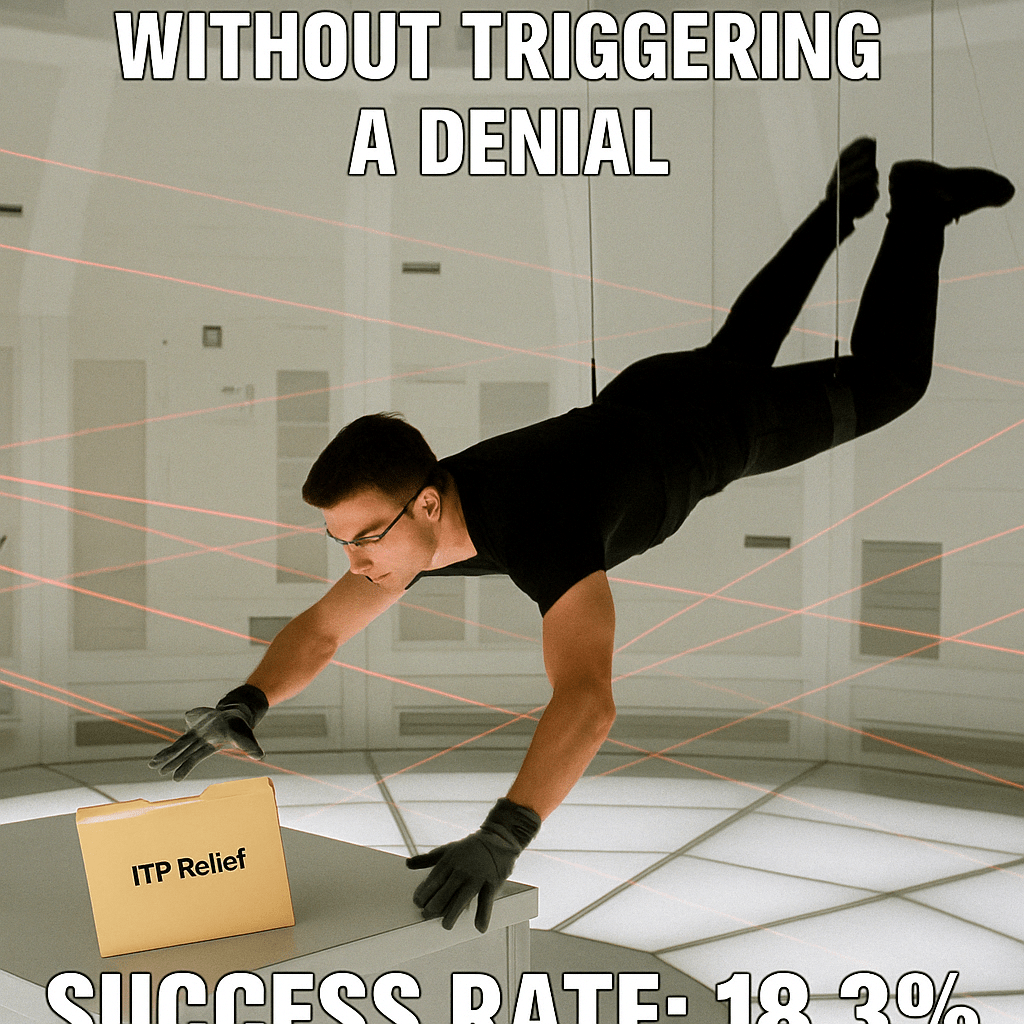
In the toolbox of EU competition enforcement, Inability to Pay (ITP) is a curious instrument. It exists, it’s official, and it’s mentioned in the Commission’s 2006 Fining Guidelines (point 35, to be precise). But for many, it feels a bit like a theoretical lifeboat: part of the ship’s safety design, yet rarely deployed — and almost never spotted returning to shore.
The principle behind ITP is simple: fines, however justified, should not irreparably sink a company. Deterrence matters — but not at the cost of economic annihilation, massive job losses, or collapse of vital services. There’s a recognition, albeit understated, that competition policy doesn’t operate in a vacuum. As such, where a fine would “irretrievably jeopardise the economic viability” of an undertaking and “cause its assets to lose all their value”, a reduction is possible, within a specific social and economic context.
Yet possible does not mean probable. Between 2000 and 2019, only 18% of ITP claims were successful. Most companies that knock on this particular door find it firmly shut — if not locked from the inside.
So, is ITP just a mirage of mercy? Or is it doing exactly what it’s meant to do — provide a lifeline for the few, not the many?
Let’s turn to a real case.
Abengoa: When the Threshold Is Met
Abengoa — once a major player in renewable energy and ethanol production in Europe — recently found itself on the receiving end of a €20 million fine by the Commission. Its offence? Participating in a cartel aimed at manipulating ethanol price benchmarks published by Platts, an infringement that spanned nearly three years and affected the entire European Economic Area.
The case was serious, and the evidence compelling. But what made it remarkable, procedurally speaking, was that Abengoa submitted a request for fine reduction under the ITP mechanism — and the Commission accepted it.
Yes, you read that correctly. In a world where 4 out of 5 such requests fail, Abengoa succeeded.
Why?
Because Abengoa had long been navigating stormy waters: it had undergone painful restructuring, faced multiple insolvency proceedings in Spain, and was the subject of national and international concern. Its financial vulnerability wasn’t speculative — it was structural and well-documented.
The Commission, after thoroughly examining the company’s accounts and the state of implementation of its restructuring plans, granted a reduction. It didn’t tear up the fine altogether (nor should it), but it acknowledged the exceptional context. Combined with a 10% discount for settlement cooperation, the final sanction reflected both gravity and economic realism.
A Safety Valve, Not a Safety Net
The takeaway from Abengoa is not that the ITP door is now wide open. It isn’t — and it shouldn’t be. A system that routinely allows companies to plead poverty after breaching EU law would undermine deterrence and incentivise moral hazard.
But it does suggest something more subtle, and arguably more important: that the ITP mechanism works when it is supposed to. Its rarity is not necessarily a sign of failure, but of design. After all, emergency exits are not meant to be the main route — they’re there for when all others are blocked.
If anything, Abengoa shows us that ITP is not a loophole but a disciplinary exception. It’s hard to get, it demands full transparency, and it requires the Commission to balance legal firmness with economic insight.
And perhaps, as enforcement becomes more entangled with questions of social sustainability, the real question is not whythe ITP is used so little, but whether we’re ready to accept that some safeguards should only work when everything else doesn’t.
A fire extinguisher isn’t broken just because it spends most of its life behind glass.
Disclaimer
While this case arises under Council Regulation (EC) No 139/2004 on the control of concentrations, and not under Regulation 1/2003, it is worth noting that the legal provisions governing the protection of confidential information share essentially the same material content across both frameworks. Moreover, the European Commission’s guidance on the use of confidentiality rings expressly applies to procedures conducted under both merger control and Articles 101 and 102 TFEU. For these reasons, and given the broader relevance of the issues at stake – including access to personal data, the right to privacy, and procedural fairness – this article engages with the legal questions surrounding confidentiality and the potential use of confidentiality rings, even in the context of merger proceedings.

1. A far-reaching RFI, two firms, and many open questions
In October 2022, Vivendi notified its acquisition of sole control over Lagardère. The transaction was cleared in June 2023 with commitments. Not long after, the Commission opened an investigation into alleged gun jumping.
In September 2023, it issued two RFIs under Article 11(3) of the Merger Regulation. These RFIs required both companies to produce documents containing certain keywords, including emails and messages exchanged through private accounts and personal devices of employees and company officers, as long as they had been used even once for professional purposes.
The breadth and nature of these demands raised eyebrows: could a company comply with such requests without breaching privacy rights, professional secrecy or – worse – criminal law under national legislation?
2. Interim relief: when cooperation may become criminal liability
Both Vivendi and Lagardère challenged the RFI Decisions before the General Court, also requesting interim measures. Lagardère argued that complying with the RFI would force it to commit a criminal offence under French law (notably Article 226-1 of the French Penal Code), as it would involve accessing private communications without consent.
Initially, the General Court dismissed the application for interim measures, finding no urgency. But this was overturned by the Vice-President of the Court of Justice[1], who ruled that the risk of criminal liability was sufficiently concrete to justify interim protection. The harm, he observed, was not only legal but reputational: “the stigma attached to a criminal conviction and the breach of trust”[2] with employees amounted to serious and irreparable harm.
The key point here is not whether criminal sanctions were likely to be imposed eventually, but rather that the company would be forced to adopt conduct that could amount to a criminal offence, placing it in an impossible position: comply with the Commission and violate national law, or refuse and face penalties under EU law.
3. Where were the confidentiality rings when they were most needed?
The case invites a natural question: why were confidentiality rings not used?
Confidentiality rings are a tried and tested mechanism for reconciling the need for access to sensitive information with the rights of those who provide it. They allow confidential data to be reviewed by a limited circle- external counsel-under strict safeguards. The Commission’s own guidance promotes their use in both antitrust and merger proceedings.
In Vivendi/Lagardère, the Commission did attempt to introduce data room protocols and assurances, particularly concerning sensitive personal data and journalistic sources. However, as the Court observed, these safeguards were largely informal – outlined in a letter, not embedded in the RFI Decisions – and therefore legally uncertain.
More importantly, the Court took a firm stance: mere access to personal data can, in itself, constitute a serious interference with the right to privacy under Article 7 of the Charter and Article 8 ECHR[3]. This marks a shift: where in Akzo[4] the mere reading of privileged documents was not considered a violation, here the simple act of accessing private data is enough to tip the balance.
4. Possession, control, and legal impossibility
A further procedural twist is the question of possession and control. Lagardère pointed out that the documents requested were not in its possession or under its control, but rather in the private realm of its employees. This posed an obvious problem: how could the company be sanctioned for failing to produce documents it neither held nor could lawfully access?
Interestingly, Article 11(3) of Regulation 139/2004 allows the Commission to address RFIs directly to natural persons. This would have been a procedurally safer route, as those individuals clearly control the documents. By addressing the RFI to the company instead, the Commission arguably placed it in a legally contradictory position, between national criminal law and its EU obligations.
In other words, the Commission may have overreached – not in its intent, but in its choice of procedural vehicle.
5. A delicate change: privacy above legal privilege?
Another conceptual point arises from the comparison between privacy and legal professional privilege (hereinafter, “LPP”).
In Akzo, the Court held that the harm of reading privileged documents could only arise if the Commission relied on them in its decision-making. But in Vivendi, the Vice-President made clear that mere access to personal data constitutes harm, even if the documents are not used. This suggests a potential recalibration of fundamental rights, with privacy taking centre stage in digital-age enforcement.
This does not mean LPP is weakened – but it may indicate that privacy, in its own right, is gaining greater procedural protection, particularly when the volume and sensitivity of data are significant.
Conclusion: Towards a new procedural equilibrium?
The Vivendi/Lagardère case is more than a procedural scuffle. It is a revealing episode in the broader tension between the Commission’s investigatory powers and the fundamental rights of the parties involved. The Commission must be able to investigate effectively-but not at the cost of violating national law or undermining constitutional guarantees.
So where does that leave us?
Confidentiality rings offer one practical solution. Their absence in this case is telling. As RFIs become broader, deeper, and more digitally invasive, such safeguards should not be optional, informal or post hoc – they should be embedded ex ante into the procedural DNA of the request.
Because if EU competition law now demands access to private WhatsApp chats and personal emails, it also demands that we rethink the balance between enforcement and rights.
Should we allow companies to be squeezed between conflicting legal obligations without procedural relief? Or is it time for the Commission- perhaps the legislature – to develop clearer frameworks that protect privacy without paralysing enforcement?
The Court will answer in time. But the question can no longer be ignored.
[1] Order of the Vice-President of the Court of April 11 of 2024, Lagardère SA v European Commission, Case C-89/24 P(R), ECLI:EU:C:2024:312.
[2] Ibid, paragraph 77.
[3] Order of the Vice-President of the Court of April 11 of 2024, Vivendi SE v European Commission, Case C-90/24 P(R), ECLI:EU:C:2024:318, paragraph 100.
[4] Order of the President of the Court of September 27 of 2004, Akzo, Case C-7/04 P(R), ECLI:EU:C:2004:566.
 Co(E)mpetition Procedure
You must be logged in to post a comment.